Lake Almanor Family Vacation | July 2024
- Scroll down to the bottom for MORE wonderful photos!
Report & images submitted by SCCC member Stan Houlberg
Last July our family headed north out of Los Angeles for our annual vacation to Lake Almanor in Northern California. Our family had a home built there on the lake almost fifty years ago. While there the family spends a lot of time exploring the area, visiting Lassen Volcanic National Park, hunting through antique shops, relaxing on the Lake’s beach, going on hikes and fly fishing.
I usually try to escape the beach and antique shops a couple times a week to spend time fly fishing some of my favorite lakes and streams in the area. This year I wanted to check out some of the areas that were victim to the Dixie Fire that devastated over one million acres of beautiful dense forest that stretched from the Feather River Canyon all the way north up to and around Lassen Volcanic National Park.
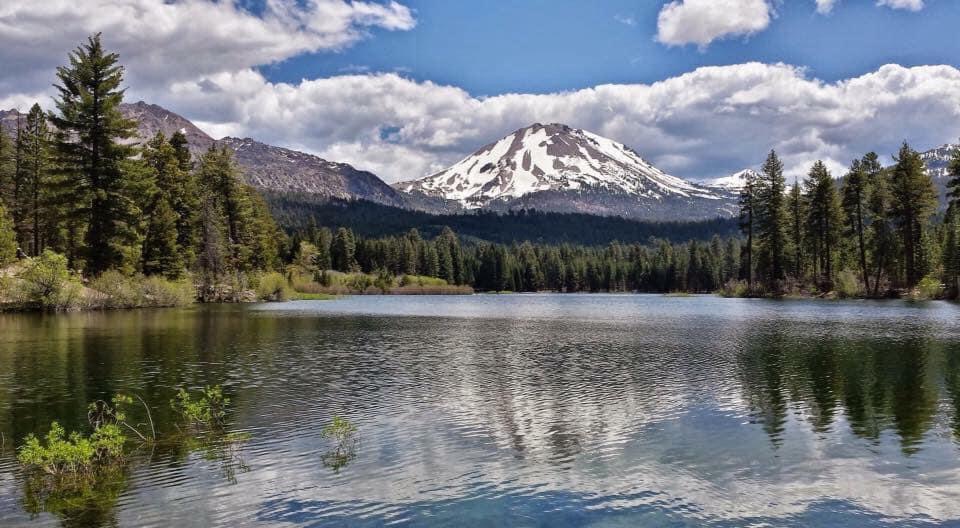
Two thirds of Lassen Park was incinerated by the fire, some areas more than others. The fire wrapped itself around Lassen Peak from the South and East and was stopped just before reaching Old Station and one of the most beautiful lakes in the world, Manzanita Lake. Of all the lakes I’ve fly fished in over forty five years, Manzanita is by far my favorite.
The amazing beauty of the lake, the frequently very challenging fishing and occasional success catching big beautiful brown and rainbow trout keeps bringing me back. I dream about this lake all year long and when I sit down in my float tube and drift out from the shore I feel like I’m being enveloped into an excited calm that is hard to describe.
I know the fish are there and there are some big ones to hunt. I’ve had days when I’ve caught nothing and I’ve had days when I’ve caught more than I deserve. The feel of the first jolt at the fly on the end of my line and to watch my leader slicing through the surface of the water brings an instant feeling of accomplishment. If I don’t catch another trout, or even land the one on the end of my line, I still feel completely blessed. After staring at the beauty of the fish, I look up at Mt. Lassen and into the sky above and think “Thank You” as I watch it slide back over the lip of my net.
This year I once again had three of my grandchildren along that I wanted to share the adventure of fly fishing with. Their ages went from nine to fourteen years old, so I knew from past mistakes I had to leave my rod in the truck. It was my job to set up their rigs, fly and a bubble on lightweight spinning rods, teach them how to and where to cast, untangle lines (frequently) and replace lost flies and broken bubbles that hit rocks on the bank behind us while casting.
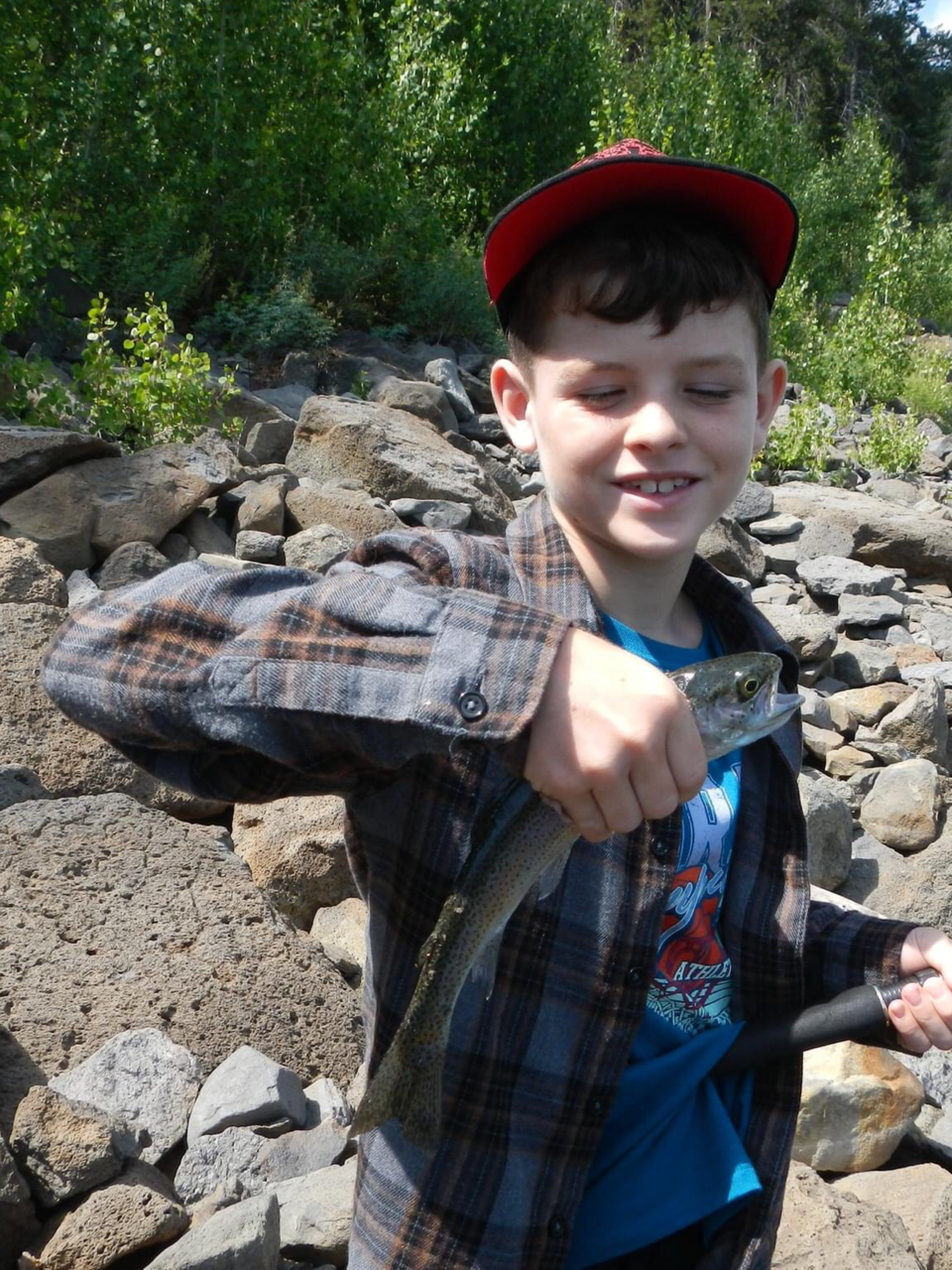
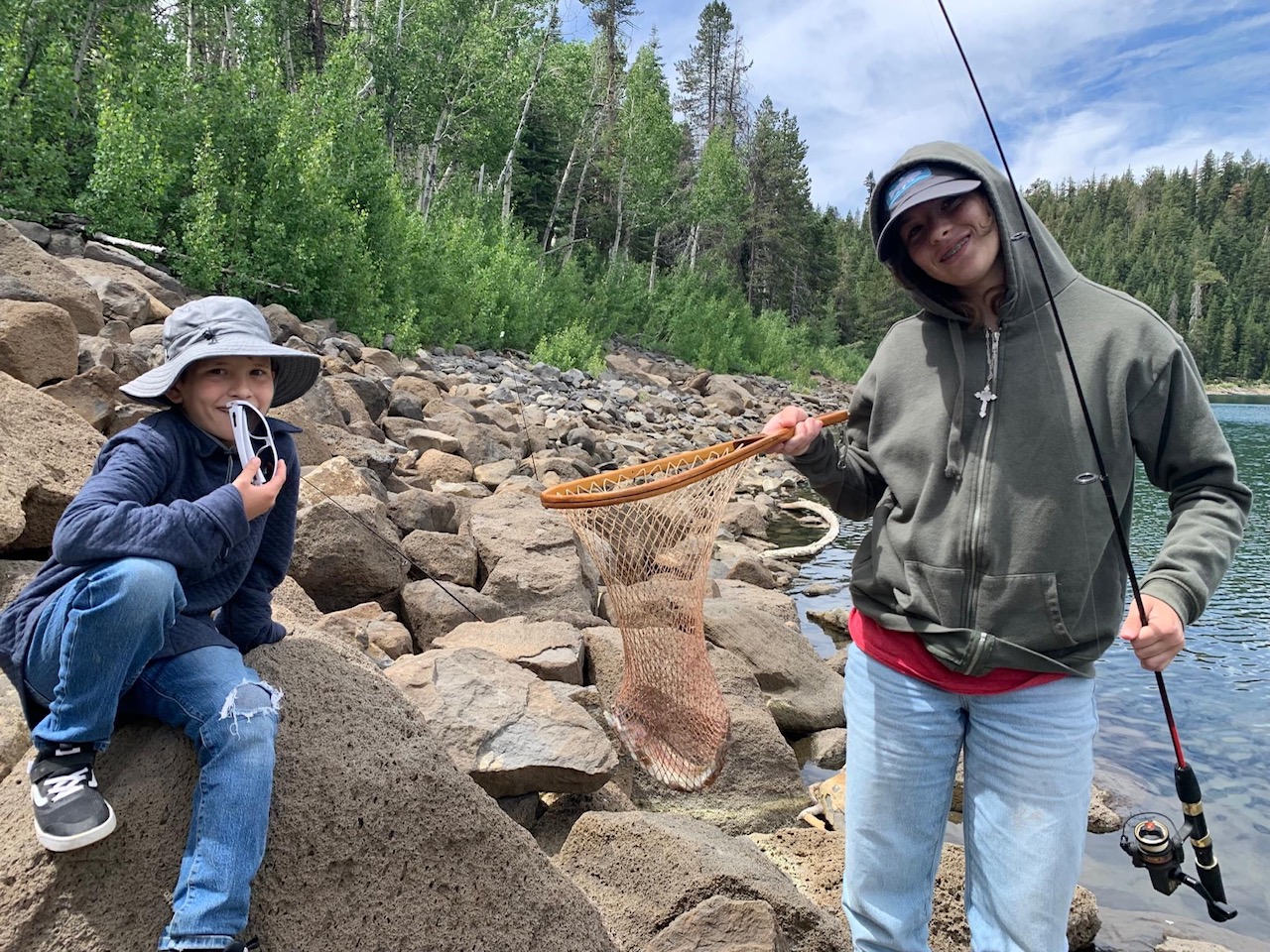
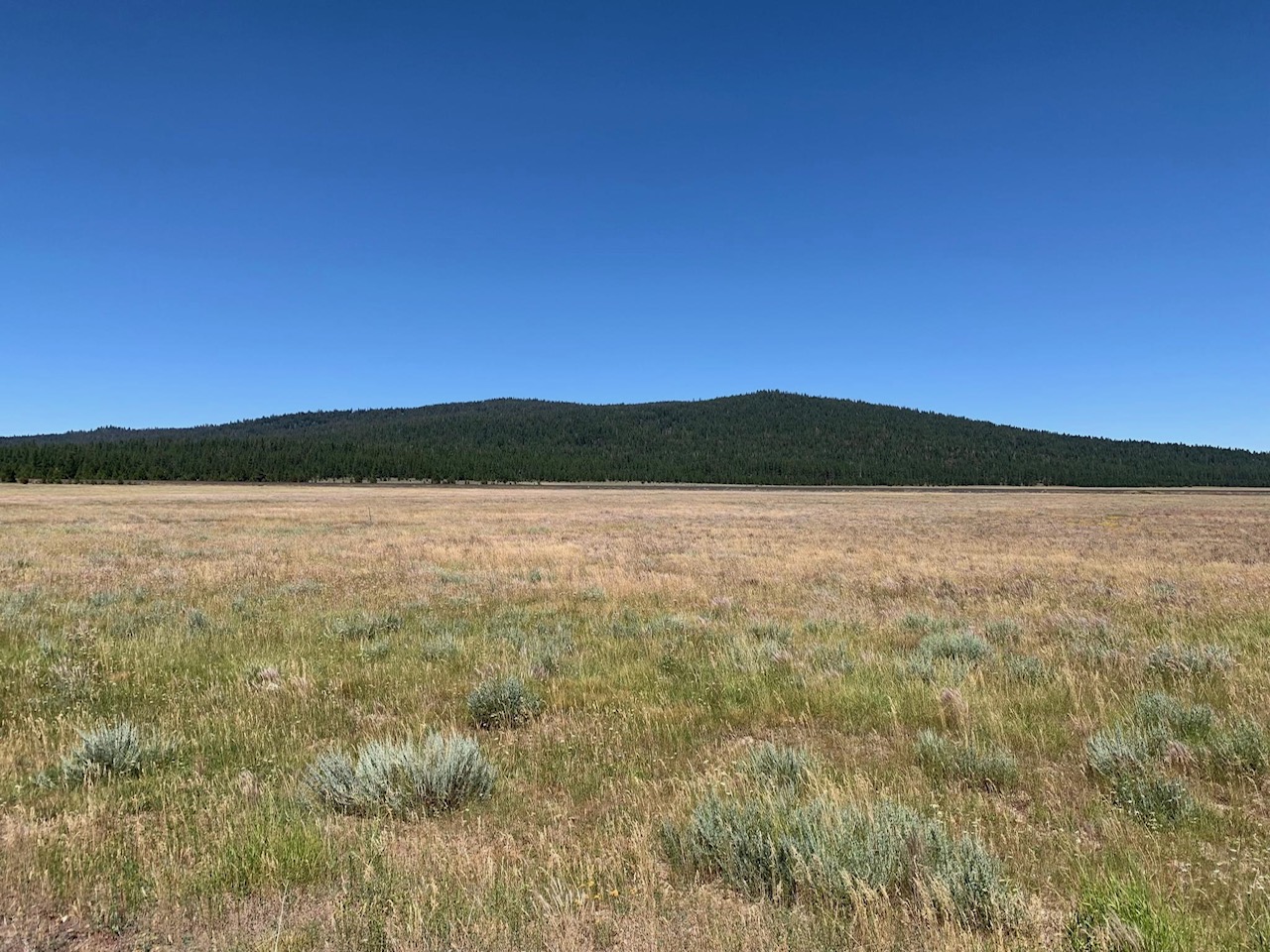
I took them to a small local lake on the tip of a rounded mountain that was formed by a crater filled with pure clear blue water from rain and snowmelt, where in the shallows swam brightly colored little rainbows cruising for bugs. On days I fished there alone it was unusual for me to catch less than twenty or thirty little trout, ranging from ten to sixteen inches. I never caught a really big trout there, but it was relaxing to fish a lake where you could spend the whole day catching one after the other on dry flies using a one to three weight fly rod.
My grandchildren all had a blast. I couldn’t stop them from wanting one more cast over and over again. We fished for over four hours until I ran out of clear bubbles that were half full with water. I don’t think any of them had one thought all day long about playing with their cell phones, or electronics that was so hard to keep them off of at home. The smiles on their faces were my reward. On the drive up to Almanor this year all we kept hearing from little nine year old Tommy is how he wanted to catch a really big one this year. He’ll be saying the same thing on the way up next year.
After making sure my grandchildren had their fill of fishing, it was my turn to sneak out before they woke up and ask where grandpa was. I wanted to see what was left from the fire that ravaged Yellow Creek three years before. Seven miles of dusty, rutted and rocky road took me West of Lake Almanor to the Humbug Valley where Yellow Creek flowed through.
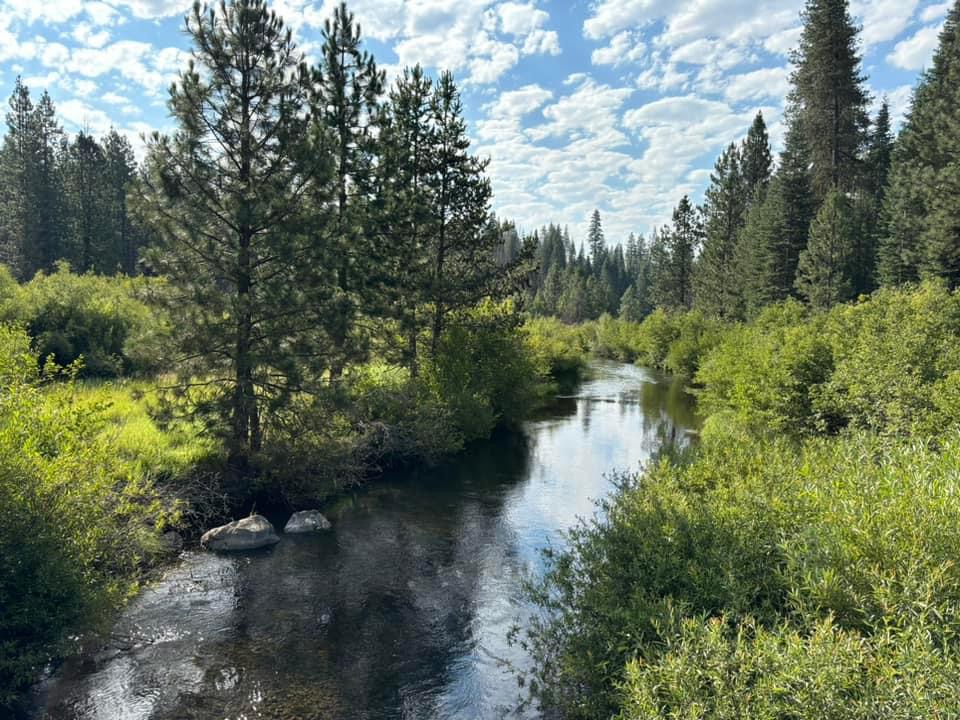
The first mile or two was almost completely incinerated with only thin wooden toothpicks sticking up where lush green conifers use to hide everything that was more than fifty feet into the forest. About two miles down the dusty road, I came to the small bridge crossing over Butt Creek. I was amazed at how there was practically no evidence of fire at all. The creek in both directions from the bridge had lush overgrown vegetation engulfing it as far as I could see. It looked like an oasis of life in a burnt, dead forest.
I knew there were fish in there and lots of them, but there were few openings to cast from and I was on a mission to see what was left of the beautiful little spring creek that twisted and turned its way through the big meadow of Humbug Valley. Within a half mile after I crossed the bridge the lush trees and streamside vegetation was replaced with desolate remains of the forest which use to be difficult to navigate your way through while trying to stay on the right logging road that would eventually bring you to Humbug Valley and the beautiful remote Yellow Creek.
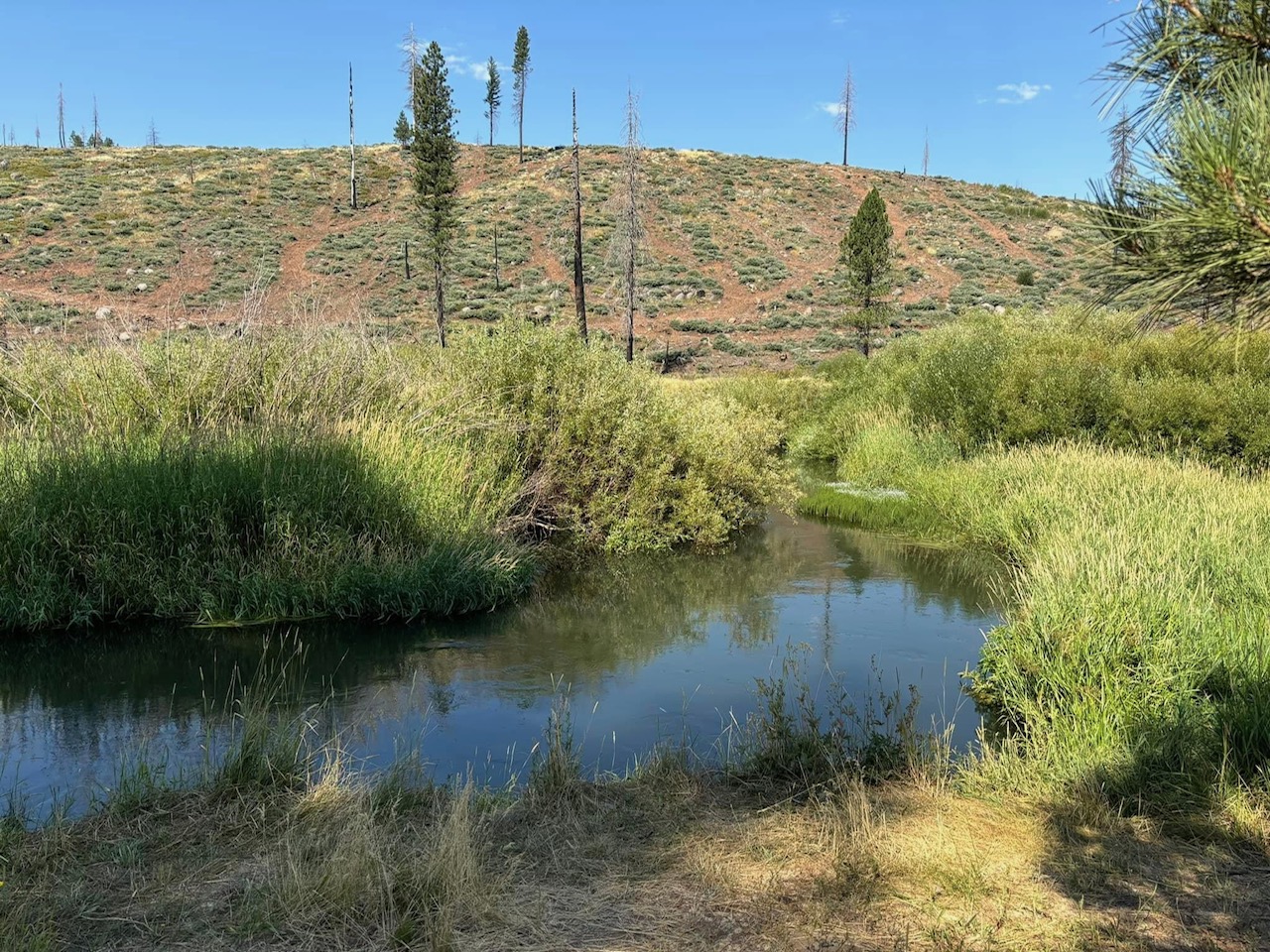
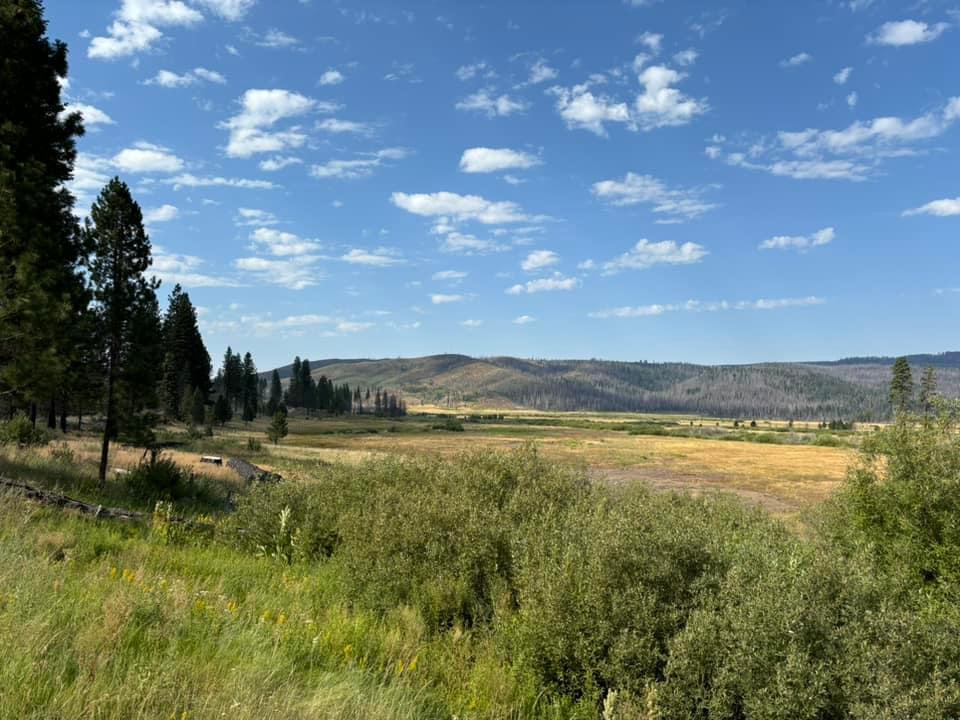
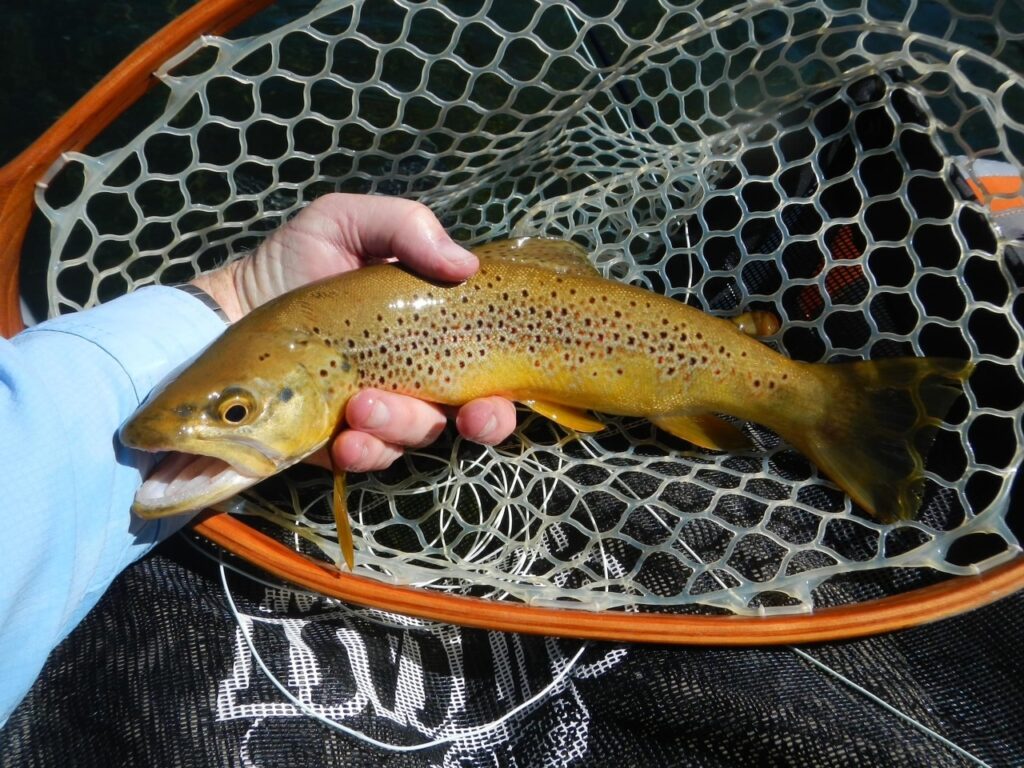
The rest of the seven miles to the creek contained a mixture of severely incinerated forest to places where there were a few stubborn green trees mixed in within the burnt forest. When I finally reached the small valley Yellow Creek flowed through I was greeted with a beautiful verdant meadow a mile or so wide and over five miles long. Down the center of this meadow ran a rich spring creek where the temperature measured 47 degrees all year long. The creek was full of aquatic grasses flowing in the crystal clear, cool water and some of the prettiest little brown trout I’ve ever seen.
The next thing I noticed was how there were no cattle in the meadow, or split rail fencing bordering both sides of the creek to keep them out of the water. Because there were no cattle in the meadow, the grass that covered it was chest high almost everywhere and the fisherman trails that once lined both sides of the creek were all overgrown.
Where there were before small occasional bushes along the creek that the trails easily circumvented on the way from one fishing run to the next, there were now very few openings between the huge bushes where casting was unobstructed. I had to fight my way through thick chest high grass wondering how many snakes I was stepping over while trying to avoid stepping into knee deep ditches filled with black gooey muck. To make things worse, I didn’t remember to bring a bottle of water with me.
My hike to the creek started around noon and it was a warm 90 deg. day. By the time I made it to the creek I was exhausted. I only fished a couple runs that I could get to. Three little brown trout hit the grasshopper I had on the end of my line, but none of them stuck. It seemed like there were a lot fewer fish in the creek than in the past. I found out later from a guide in Lake Almanor that Otters had migrated upstream from the Feather River into the creek and severely impacted the fishery.
I wanted to hike up the creek another half mile to where Big Spring Creek ran into Yellow Creek, but I felt like I was on the verge of heat stroke. For a change I had enough common sense that I looked over the meadow where my truck was parked half a mile away and I turned my back to the creek. It took me over half an hour to get back to my truck where I had to settle for a very refreshing warm beer.
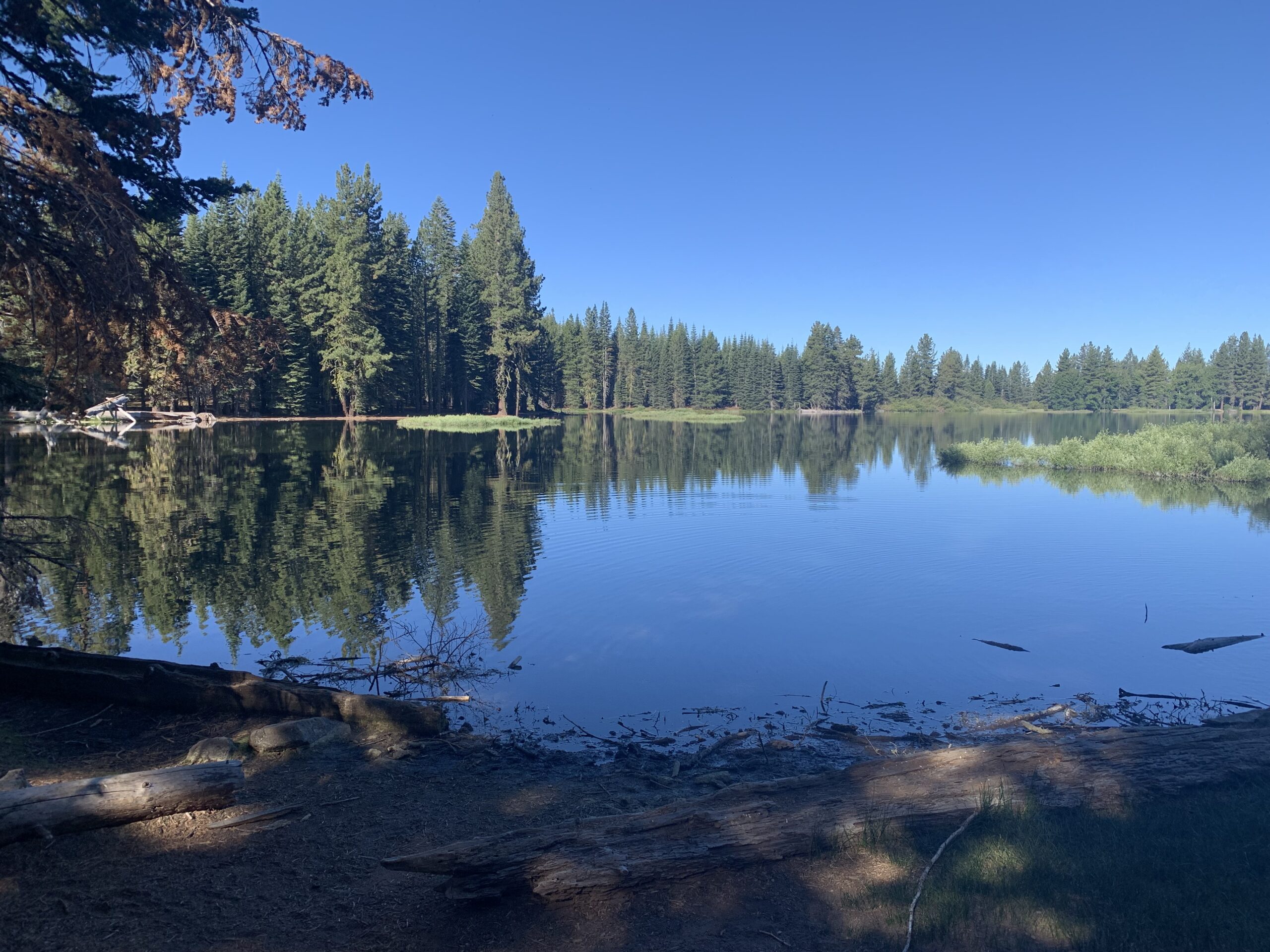
My next fishing escape a couple days later was to Manzanita Lake. I had satisfied my curiosity about what was left of Yellow Creek and I had helped my grandchildren have a great time catching small trout in the crater of a volcano. Now I had an overpowering need for some serious fly fishing in a serine and quiet environment. I needed to sit and relax and drift and cast in the inflatable pew of my Mountain Church, Manzanita Lake.
I sat in my float tube and slowly flippered off into the water around 9 am. The water was like glass surrounded by silence. I could hear a few campers in the distance behind the thick green conifers trying to get their day started. I concentrated my fishing around three brush islands on the South end of the lake. I worked the small openings and breaks between the brushes on each island. Once I covered the complete circumference of the island I moved to the next.
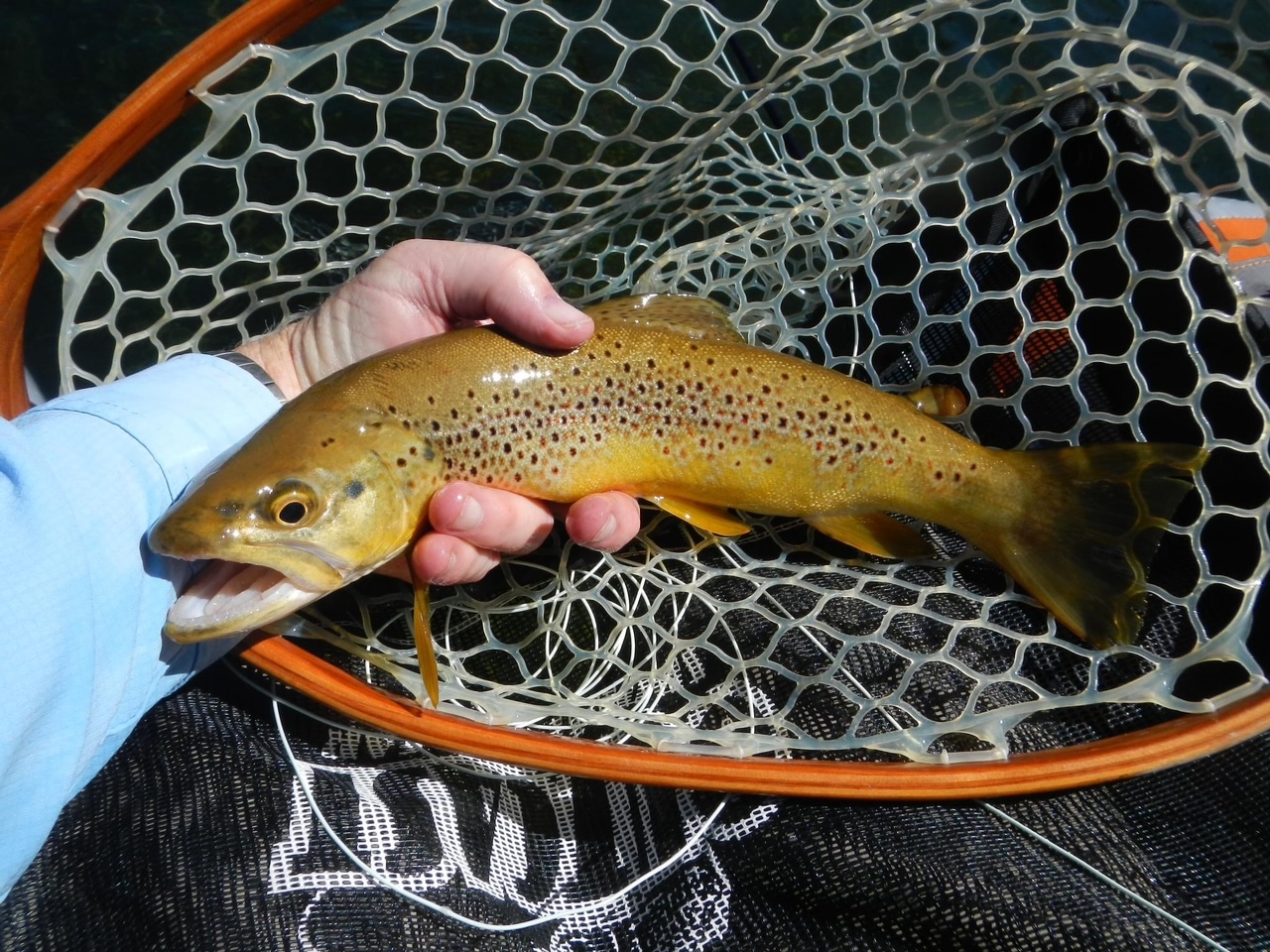
The first island gave up two beautiful little 16″ browns. I had a third on for a few seconds, but he won his freedom after making it back into the island brush and wrapping my leader around the submerged base of a bush. After I completed covering the areas around this island I decided to move on to the next.
As I was flippering over to the nearby island the wind had started up and was making casting my five weight line more difficult. When I was finally within casting distance I let the wind take my line far behind me into a large section of open water where I planned to let the line fall onto the surface to prepare for a water haul into the wind. I wanted my forward cast to land into a big cut in the brush on the island I was casting to. My water haul was violently interrupted by a huge explosion behind me and as I turned my head to see what happened I got the glimpse of a huge brown trout exploding out of the water with my damsel in its mouth.
I felt the weight of the brown heavily bending my rod then three seconds later my line went slack. The fly pulled out and I just stared at the large ring in the water where the fish once was. I could hear a couple other fly fishers standing next to their float tubes on the nearby bank yelling with their hands up over their heads indicating the fish was well over 24″ long. That was the biggest fish I’ve ever hooked at Manzanita and as usual, the big ones always seem to get away.
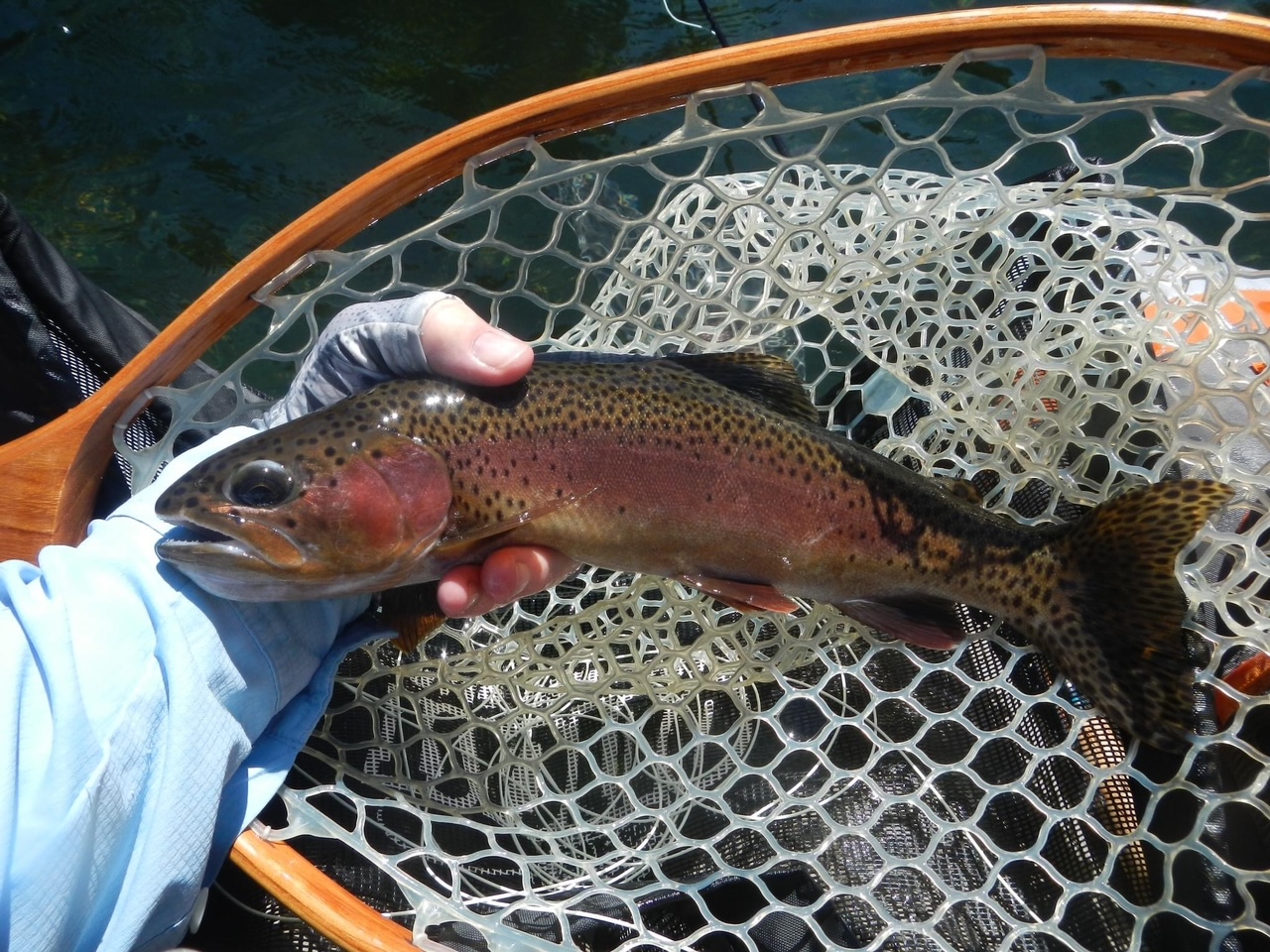
The previous year I had landed two nice browns while fishing around the islands. One was an 18″ brown on a blue deer hair parachute damsel and the other was a 19 ½” brown on a #20 parachute Adams. After finally getting my composure back I continued casting to the cuts and small openings in the brush around the island I was fishing. I continued fishing my unweighted damsel nymph as close to the brush as possible and within a half an hour I had brought two very dark red sided rainbows to net.
Both fish were 16″ long, as were both browns I had landed earlier. In past years all the rainbows I caught at Manzanita were very silvery Eagle Lake strain with deep green backs, just like you would expect a rainbow to look, but in the last two years fishing the same island during the same time of year at Manzanita all the rainbows I caught were darkly colored with very red sides and they were all 16″ long.
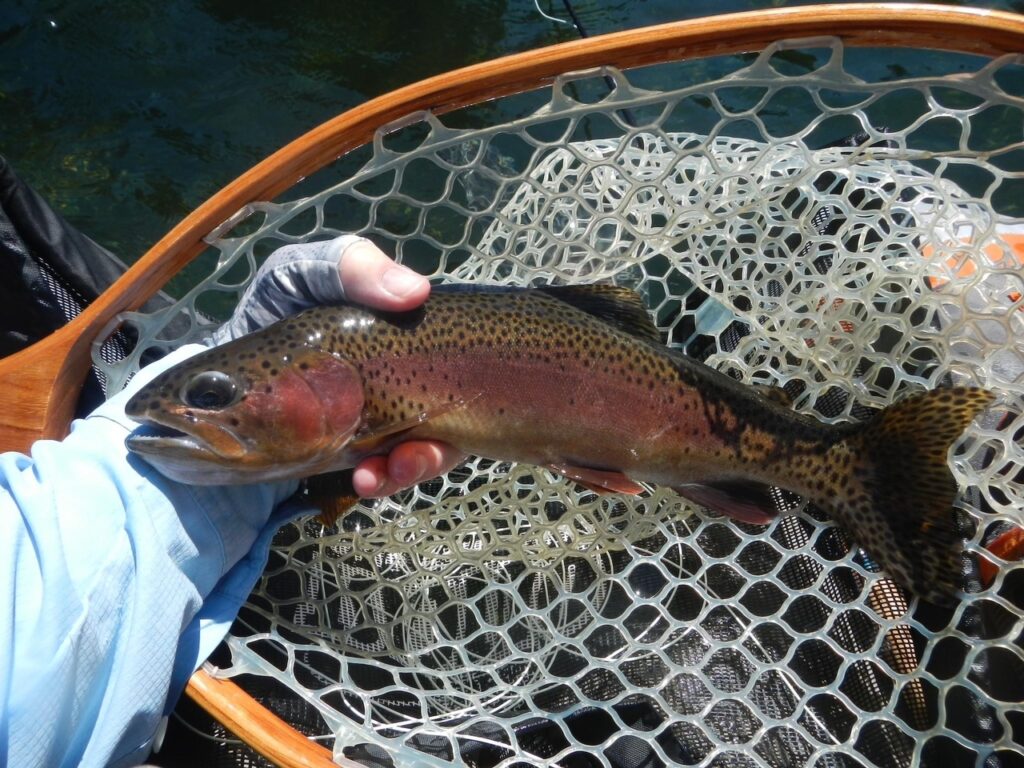
I fished Manzanita for four hours that day. I hooked six fish and landed four. Two were browns and two were rainbows that were all 16″ long, but the brown over 24″ was the one I couldn’t get out of my mind. It was another day to remember. The weather was perfect. The scenery couldn’t be more incredible. I had landed a few beautiful trout and my waders had only leaked a little. I carried my tube and fly rods up to my truck, leaned them up against it, turned around and took one more look at the Lake I’ll be dreaming about until next year.
PHOTO ALBUM BELOW